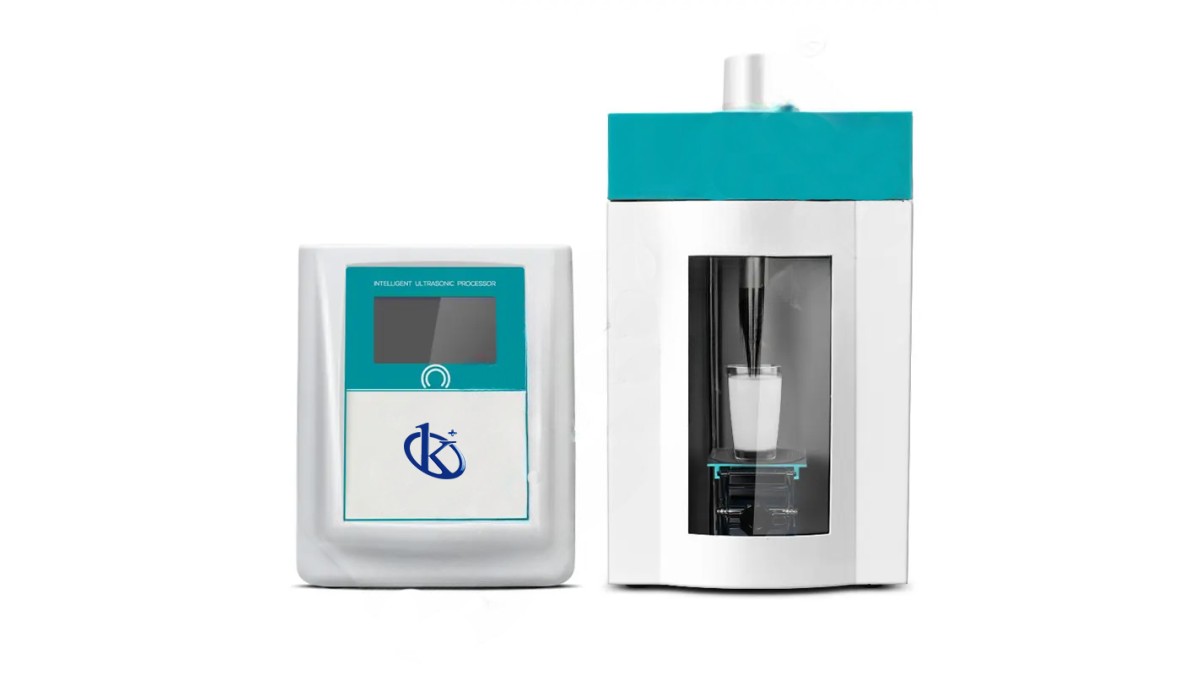
Ultrasonic Homogenizers: Practical Applications and Techniques 2026
Ultrasonic homogenizers are pivotal tools in modern laboratories, delivering superior mixing capabilities and ensuring that samples are processed uniformly. In this article, we will delve into the applications, techniques, and best practices relevant to ultrasonic homogenizers in 2026.
What is it used for in 2026
In 2026, ultrasonic homogenizers are utilized for a variety of applications across different fields. These devices are primarily used to:
- Emulsify liquids: They efficiently create stable emulsions by dispersing one liquid into another.
- Homogenize samples: They ensure a uniform mixture of various substances, essential in food, pharmaceutical, and cosmetic industries.
- Cell disruption: They are crucial for breaking down cells to release intracellular components for biochemical analysis.
- Particle size reduction: They help in reducing particle sizes in suspensions for more consistent and effective applications.
History and evolution of the technology
The technology behind ultrasonic homogenizers has evolved significantly since its inception. Initially, the focus was on mechanical methods for mixing, which were often inefficient. The introduction of ultrasonic waves revolutionized this process, allowing for:
- Enhanced efficiency: Ultrasonic waves create cavitation bubbles that collapse violently, resulting in high shear forces that break down particles very effectively.
- Increased precision: Modern ultrasonic homogenizers come equipped with digital controls and monitoring systems, facilitating precise adjustments and consistent results.
- Diverse applications: Over the years, their applications have expanded beyond just laboratory use to industrial processes, including biotechnology, pharmaceuticals, and food processing.
How to use it step by step
Using an ultrasonic homogenizer involves several steps to ensure optimal results:
- Preparation of the sample: Ensure that the sample is well-prepared and within the recommended volume for the homogenizer being used.
- Setup: Connect the ultrasonic probe to the device and ensure it is securely attached.
- Settings: Set the desired power, frequency, and duration according to the specific application and sample type.
- Process: Immerse the probe into the sample and activate the homogenizer, monitoring the process closely to prevent overheating.
- Post-processing: After processing, carefully remove the probe, clean it thoroughly, and analyze the homogenized sample.
Best techniques and protocols
In 2026, the best techniques for using ultrasonic homogenizers involve understanding sample characteristics and optimizing parameters:
- Adjusting power: Start at lower power settings and increase gradually to find the optimal level for your sample.
- Time management: Monitor processing time to avoid overheating, typically between 30 seconds to a few minutes depending on the viscosity and volume.
- Cooling intervals: Implement cooling periods between processing to maintain sample integrity, especially for heat-sensitive materials.
- Use of solvents: When necessary, incorporate suitable solvents to aid in homogenization without compromising sample quality.
Practical applications by laboratory type
Ultrasonic homogenizers find applications across various laboratory types:
- Biotechnology laboratories: Used for cell lysis and DNA extraction.
- Pharmaceutical laboratories: Essential for drug formulation and quality control.
- Food laboratories: Employed in the preparation of emulsions and homogenizing food products for consistency.
- Environmental laboratories: Used for sample preparation in pollutant analysis and environmental monitoring.
Regulations, standards and certifications
In 2026, laboratories must adhere to various regulations and standards when using ultrasonic homogenizers:
- ISO standards: Compliance with ISO 9001 for quality management systems is essential.
- Safety standards: Ensuring compliance with safety regulations to protect laboratory personnel during operation.
- Calibration protocols: Regular calibration and validation are required to maintain accuracy and reliability in results.
Comparison with alternative technologies
While ultrasonic homogenizers are effective, several alternative technologies are also used in laboratories:
- Mechanical homogenizers: Typically involve blades and offer less precise particle size reduction.
- High-pressure homogenizers: Provide similar emulsification but may require more maintenance and have higher operational costs.
- Blenders: Suitable for rough mixing but not effective for fine homogenization tasks.
Comparison of available models
| Model | Best for | Key specs | Recommended use case |
|---|---|---|---|
| YR05015 | Low to medium viscosity samples | Power: 1.5 – 150W, Mixing capacity: 0.1 – 150 ml | Homogenizing biological samples and emulsions |
| YR05016 | Medium viscosity samples | Power: 2-5 – 250 W, Mixing capacity: 0.1 – 300 ml | Pharmaceutical applications and emulsions |
| YR05017 | Medium to high viscosity samples | Power: 10 – 650 W, Mixing capacity: 0.1 – 500 ml | Disruption of cells for biochemical analysis |
| YR05018 | High viscosity samples | Power: 10 – 900 W, Mixing capacity: 0.1 – 600 ml | Food and beverage processing |
| YR05019 | Very high viscosity samples | Power: 20 – 1,200 W, Mixing capacity: 1 – 1,000 ml | Industrial applications and large-scale processes |
| YR05020 | High throughput applications | Power: 50 – 1,800 W, Mixing capacity: 1 – 1,200 ml | Research laboratories needing rapid processing |
Common mistakes and how to avoid them
Laboratory professionals often encounter mistakes when using ultrasonic homogenizers. Common issues include:
- Overheating: Avoid by monitoring processing time and incorporating cooling intervals.
- Incorrect settings: Always double-check power and time settings based on sample type.
- Poor sample preparation: Ensure samples are adequately prepared and compatible with the homogenizer.
Maintenance, calibration and good practices 2026
To ensure reliable performance of ultrasonic homogenizers, proper maintenance and calibration are crucial:
- Routine cleaning: Clean the probe and device after each use to prevent cross-contamination.
- Regular calibration: Perform calibration checks to ensure accuracy in measurements.
- Documentation: Keep detailed records of maintenance activities for compliance and quality control.
Cost-benefit analysis 2026
Investing in ultrasonic homogenizers yields significant benefits:
- Efficiency: They reduce processing time significantly compared to other methods.
- Quality: Enhanced sample quality leads to more reliable experimental results.
- Versatility: Capable of handling a wide range of samples, making them suitable for various applications.
Frequently asked questions
What features should I look for in an ultrasonic homogenizer?
Look for features such as adjustable power settings, probe sizes, digital controls for precise timing, and safety features such as overload protection.
How do I determine the right model for my laboratory?
Consider the sample types, required mixing capacity, and the viscosity of your materials when selecting a model.
Can ultrasonic homogenizers be used for heat-sensitive samples?
Yes, but it is crucial to monitor processing time and incorporate cooling periods to prevent overheating.
What maintenance is required for ultrasonic homogenizers?
Routine cleaning of the probe, regular calibration, and keeping maintenance records are essential for optimal performance.
Are there any safety precautions I should take?
Always wear appropriate personal protective equipment, and ensure that the device is used in a well-ventilated area to avoid exposure to aerosols or fumes.
How can I request a quote for a model?
You can easily request a quote by contacting our sales team or visiting our online platform designed for convenience.
If you are looking for a fusion of innovation and quality, you have come to the right place. At Kalstein, we offer you the luxury of exploring our exclusive catalog of laboratory equipment. We manufacture every device to the highest standards of excellence. Our intuitive and seamless online purchasing channels are designed for your convenience, securing the most competitive prices. Hesitate no longer — we bring science to life, it is time to become part of our community.