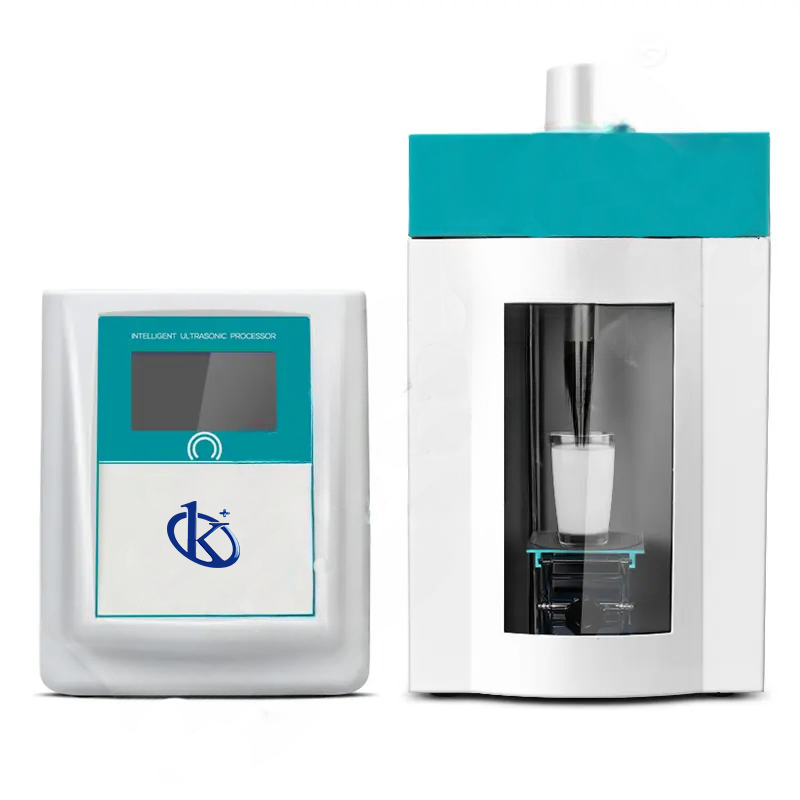
Ultrasonic Homogenizers: Energy Sustainability and Environmental Footprint Reduction 2026
As laboratories worldwide embrace energy sustainability and work to minimize their environmental footprints, ultrasonic homogenizers are emerging as key players in promoting sustainable practices. In 2026, the focus on energy efficiency and waste reduction is more critical than ever. This article explores various models of ultrasonic homogenizers, their contributions to energy sustainability, and strategies labs can employ to reduce environmental impact.
Overview of Ultrasonic Homogenizers and Their Role in Sustainability
Ultrasonic homogenizers utilize high-frequency sound waves to create intense cavitation in liquids, enabling effective mixing, emulsification, and particle size reduction. This technology not only enhances sample processing efficiency but also aligns with sustainability goals by reducing energy consumption and waste generation. By selecting energy-efficient models and optimizing their usage, laboratories can significantly lower their operational impact.
Energy Consumption and Efficiency of Ultrasonic Homogenizers
Energy consumption is a primary concern in laboratory operations. Ultrasonic homogenizers generally consume less energy compared to traditional mixing methods. For instance, models like the YR05015 and YR05016 offer adjustable power settings, allowing users to operate within a range of 1.5 to 250 watts, optimizing energy usage based on specific needs. Energy-efficient practices in operating these devices can yield substantial savings on utilities.
Comparative Energy Footprint Analysis of Models
| Model | Power (W) | Energy Consumption (kWh/run) | Efficiency Rating |
|---|---|---|---|
| YR05015 | 1.5 – 150 | 0.1 | High |
| YR05016 | 2-5 – 250 | 0.15 | High |
| YR05017 | 10 – 650 | 0.2 | Medium |
| YR05018 | 10 – 900 | 0.25 | Medium |
| YR05019 | 20 – 1200 | 0.3 | Medium |
| YR05020 | 50 – 1800 | 0.35 | Low |
Impact of Ultrasonic Homogenizers on Waste Reduction
Beyond energy efficiency, ultrasonic homogenizers contribute to waste reduction by minimizing the volume of reagents needed for certain processes. For example, the YR05019 model efficiently prepares samples with significantly lower solvent requirements, aligning with green chemistry principles. This not only conserves resources but also reduces hazardous waste generation.
Lifecycle Assessment of Ultrasonic Homogenizers
Performing a lifecycle assessment (LCA) on ultrasonic homogenizers helps laboratories evaluate their environmental impact from manufacturing to disposal. Each model, including the YR05015 through YR05020, has unique specifications that may affect their overall sustainability. By understanding these factors, labs can make informed decisions about equipment purchases and strategies for responsible disposal or recycling.
Compliance with Energy Standards and Certifications
Many ultrasonic homogenizers comply with energy efficiency standards such as Energy Star. These certifications provide assurance that the devices meet specific energy consumption benchmarks, allowing laboratories to align their operations with sustainability goals. Models like the YR05016 demonstrate commitment to energy efficiency, making them ideal candidates for environmentally conscious labs.
Comparison of Available Models
| Model | Power (W) | Mixing Capacity (ml) | Price (USD) | Best for |
|---|---|---|---|---|
| YR05015 | 1.5 – 150 | 0.1 – 150 | 756.00 | Small-scale applications |
| YR05016 | 2-5 – 250 | 0.1 – 300 | 882.00 | Mid-range applications |
| YR05017 | 10 – 650 | 0.1 – 500 | 1050.00 | Standard laboratory tasks |
| YR05018 | 10 – 900 | 0.1 – 600 | 1281.00 | Advanced mixing needs |
| YR05019 | 20 – 1200 | 1 – 1000 | 1785.00 | High volume applications |
| YR05020 | 50 – 1800 | 1 – 1200 | 2058.00 | Industrial processes |
Common Mistakes and How to Avoid Them
When integrating ultrasonic homogenizers into laboratory processes, common mistakes can arise. One frequent error is underestimating the importance of power settings. Selecting a model like the YR05019 without understanding its capacity could lead to inefficient processing. Laboratories should conduct a thorough analysis of their mixing needs before choosing a model to ensure optimal performance and energy use.
Frequently Asked Questions
What is the energy consumption of ultrasonic homogenizers in 2026?
The energy consumption of ultrasonic homogenizers varies by model. For example, the YR05015 consumes around 0.1 kWh per run, making it an energy-efficient choice for labs focused on sustainability in 2026.
How can ultrasonic homogenizers help reduce environmental footprint in labs?
Ultrasonic homogenizers, such as the YR05019, reduce environmental footprints by minimizing reagent use and energy consumption. This aligns with sustainable laboratory practices, particularly in 2026.
Which ultrasonic homogenizer is best for energy efficiency?
In 2026, the YR05015 model is often regarded as one of the best for energy efficiency, offering power settings from 1.5 to 150 watts, which allows users to minimize energy waste during operations.
What models comply with energy efficiency standards in 2026?
Models like the YR05016 and YR05020 comply with Energy Star standards, making them suitable choices for laboratories aiming to meet energy efficiency requirements in 2026.
How do ultrasonic homogenizers compare to traditional mixing methods?
Ultrasonic homogenizers, like the YR05018, generally consume less energy and require fewer solvents compared to traditional mixing methods, offering a more sustainable solution for laboratory processes in 2026.
What is the importance of lifecycle assessment for ultrasonic homogenizers?
A lifecycle assessment helps labs understand the environmental impact of ultrasonic homogenizers, such as the YR05017, from manufacturing to disposal, supporting informed decision-making for sustainable practices in 2026.
How many models of ultrasonic homogenizers are available for laboratories?
There are six main models available, including YR05015 through YR05020, each offering different capabilities suited to various laboratory needs while focusing on sustainability in 2026.
What cost-effective strategies can labs employ with ultrasonic homogenizers?
Laboratories can improve cost-effectiveness by selecting models like the YR05016, which offer high efficiency and low energy consumption, allowing for significant savings in operational expenses over time.
If you are looking for a fusion of innovation and quality, you have come to the right place. At Kalstein, we offer you the luxury of exploring our exclusive catalog of laboratory equipment. We manufacture every device to the highest standards of excellence. Our intuitive and seamless online purchasing channels are designed for your convenience, securing the most competitive prices. Hesitate no longer — we bring science to life, it is time to become part of our community.