
Optical Surgical Navigation
Optical surgical navigation is a cutting-edge technology that enhances the precision and safety of surgical procedures by providing real-time visual guidance to surgeons. This system utilizes advanced imaging techniques and optical tracking to accurately map the patient’s anatomy, allowing for minimally invasive interventions and improved surgical outcomes. It is widely adopted in various medical fields, including neurosurgery, orthopedics, and otolaryngology, where precision is paramount.
The utility of optical surgical navigation lies in its ability to reduce surgical risks and enhance the accuracy of instrument placement. By integrating preoperative imaging data with intraoperative tracking, it facilitates fine control during complex surgeries. Its applications extend to veterinary clinics and specialized hospitals, where tailored optical navigation solutions can greatly improve patient care. Moreover, ongoing innovations continue to expand the scope and effectiveness of these systems in clinical practice.
What You Need to Know Before Choosing Optical Surgical Navigation and Making an Investment
Key Factors to Consider
When considering optical surgical navigation systems, key factors include system accuracy, ease of integration with existing imaging technologies, and user interface simplicity for the surgical team. High precision tracking technology and compatibility with various surgical instruments are essential to enhance procedural outcomes and safety.
Other important factors are the system’s software capabilities, reliability in real-time tracking, and the availability of training and technical support. Evaluating the vendor’s service, upgrade options, and overall system flexibility will ensure that the navigation system remains effective throughout its use lifespan.
Price Range on the Market
The price range for optical surgical navigation systems varies significantly based on features, brand reputation, and included accessories. Entry-level models may be more affordable but could lack advanced functionalities, while premium systems with comprehensive capabilities command higher investment but offer greater versatility and precision.
Beyond initial costs, it is essential to consider potential expenses related to maintenance, software updates, and hardware upgrades. Budgeting for these components ensures sustained performance and prevents unexpected costs that could impact your facility’s financial planning.
Quality-Price Ratio
The quality-price ratio in optical surgical navigation depends on how well the system meets clinical requirements and its longevity. Systems providing robust accuracy, ease of use, and strong vendor support typically offer better value despite a higher upfront cost, as they reduce surgical times and enhance patient safety.
It is advisable to assess the balance between system features and cost to maximize return on investment. Reliable navigation systems that minimize downtime and require minimal consumable replacements often demonstrate superior long-term value in clinical environments.
Expected Lifespan Based on Use and Maintenance
The expected lifespan of an optical surgical navigation system varies according to usage intensity and maintenance practices. Regular calibration, proper handling, and periodic software upgrades significantly extend the operational life, ensuring consistent performance over many years.
Neglecting recommended maintenance schedules or exposing the equipment to harsh environments can shorten its functional lifespan, leading to costly repairs or early replacement. Investing in manufacturer-approved servicing helps maintain optimal system reliability and accuracy.
OPTICAL SURGICAL NAVIGATION AT KALSTEIN
Among so many products, at Kalstein you can find the ideal surgical navigation system for your Clinic
If you are unsure about which optical surgical navigation system to buy, we recommend evaluating your specific clinical needs, the compatibility with existing equipment, and the level of technical support provided. Selecting the right system ensures enhanced surgical accuracy and better patient outcomes, making it a crucial investment for your medical center.
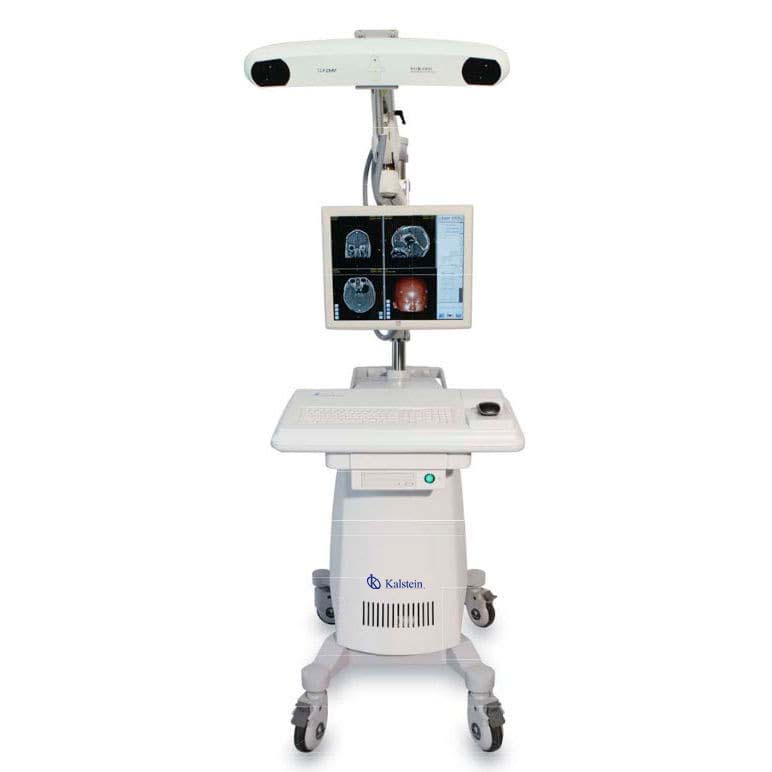
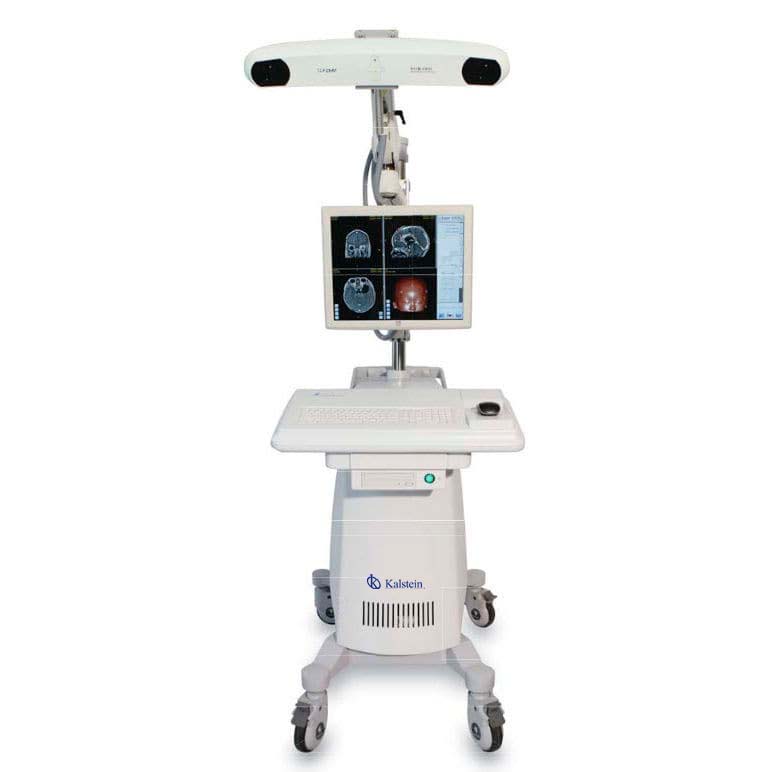
Surgical Navigation Systems YR02143
The Surgical Navigation System YR02143 represents a breakthrough in neurosurgical procedures, harnessing computer-aided…

[Marca] B
Lorem ipsum dolor sit amet, consectetur adipiscing elit. Suspendisse sed lectus ac felis fermentum convallis. Cras scelerisque aliquam ipsum vel aliquet. Sed rhoncus eu sapien vitae tincidunt…
[Marca] C
Lorem ipsum dolor sit amet, consectetur adipiscing elit. Suspendisse sed lectus ac felis fermentum convallis. Cras scelerisque aliquam ipsum vel aliquet. Sed rhoncus eu sapien vitae tincidunt…
[Marca] D
Lorem ipsum dolor sit amet, consectetur adipiscing elit. Suspendisse sed lectus ac felis fermentum convallis. Cras scelerisque aliquam ipsum vel aliquet. Sed rhoncus eu sapien vitae tincidunt…
Our optical surgical navigation system’s top seller
The Surgical Navigation System YR02143 represents a breakthrough in neurosurgical procedures, harnessing computer-aided electromagnetic technology to enhance surgical visualization, planning, and execution. Designed for precise cranial navigation, it aims to significantly reduce iatrogenic trauma to the brain tissue and minimize the risk of complications during intricate cranial neurology and ENT surgeries. Compatible with tomographic images in DICOM captured via CT, C-arm, MRI, and fMRI, this system is a trusted partner for surgeons operating in complex surgical environments.
The YR02143 Surgical Navigation System offers advanced technology for medical settings, typically appearing in the market within a price range of $150,000 to $250,000, depending on the specific features and configurations required by the purchasing institution. Potential clients are encouraged to request a custom quote to obtain the most accurate pricing based on their unique needs.
| Model | YR02143 | ||
| Component | Amount | Description | |
| Optical tracking system | |||
| NDI tracking system | 1 set | Track 3D position and orientation of active or passive markers attached to surgical tools | |
| Image management workstation | |||
| Computer system | 1 set | For 2D image fusion and 3D reconstruction, navigation system | |
| Touch monitor | 1 piece | 19 *, 1280 x 1024 resolution, medical and healthcare grade | |
| Software package | 1 set | Core set (image fusion, surgical planning and navigation, data management) | |
| Software version 1 | 1 piece | Diffusion-tensor-images navigation module | |
| Software version 2 | 1 piece | Needle-Aspiration-Biospy navigation module | |
| Mobile car | |||
| Support trolley with 4 wheels | 1 piece | To support the optical tracking system and image management workstation | |
| Surgical tools | |||
| Navigation probe | 2 pieces | To help the optical measurement system track movement | |
| Microscope probe | 1 piece | To help the optical measurement system track movement | |
| Active marker | 6 pieces | To help quickly recognize critical anatomical structures. | |
| Passive reflective sphere | 10 pieces | To reflect the infrared laser for cameras (in the optical tracking system) to capture | |
| Framework | 2 pieces | To locate passive reflective sphere with 4 pins | |
| Articulated arm | 1 piece | To hold the frame of reference | |
| Clamp adapter | 2 pieces | For the adaptation of another instrument (such as the brain needle during navigation) | |
| Foot-switch | 1 piece | To help register and navigate | |
| Touchmonitor specification | |||
| Case / bezel color | Beige | Mini VGA D-sub 15-pin; DVI-D | Mini VGA D-sub 15-pin; DVI-D |
|
Display
|
Sixe: 19.0 ”diagonal, active matrix TFT | Horizontal: 31.5-80 kHz | Horizontal: 31.5-80 kHz |
| Aspect ratio: 5; 4 | Vertical: 56.3-75 Hz | Vertical: 56.3-75 Hz | |
|
Useful display area
|
Horizontal: 14.82 “(376.32 mm) | Type: 100-240 VAC, 50-60 Hz | Type: 100-240 VAC, 50-60 Hz |
| Vertical: 11.85 “(301.06 mm) | Internal DC input power supply | Internal DC input power supply | |
|
Monitor dimensions
|
Width: 429mm (16.9 “) | DC input voltage (line): 12V 3.6V | DC input voltage (line): 12V 3.6V |
| Height (including stand): 15.21 “(386 mm) | 48 W max. | 48 W max. | |
| Depth (inc. Base) | Operating; 0 ° C to 40 ° C | Operating; 0 ° C to 40 ° C | |
| Native resolution (optional) | 1280 x 1024 @ 60/70/75 Hz | Storage: -20 ° C to 60 ° C | Storage: -20 ° C to 60 ° C |
| Other supported resolutions | 1280 x 960 / 1,024 x 768 in Hz | Operating: 20% -80% | Operating: 20% -80% |
| Colors | 16.7 million | Storage: 10% -90% | Storage: 10% -90% |
|
Brightness
|
LCD panel: 300 cd / m2 | Actual: 17.66 lbs. (8 kg) | Actual: 17.66 lbs. (8 kg) |
| With AccuTouch: 246 cd / m2 | Shipping: 25.10 lbs (11.84) | Shipping: 25.10 lbs (11.84) | |
| With IntellTouch: 276 cd / m2 | 3 years | 3 years | |
| Response time | 20 msec (typical) | Typical 40,000 hours at half brightness | Typical 40,000 hours at half brightness |
| Vision angle | Horizontal (left / right): 89 ° / 89 ° | MTBF; 50,000 hours demonstrated | MTBF; 50,000 hours demonstrated |
| (Typical, from the center) | Vertical (up / down): 89 ° / 89 ° | UL, Cul, fcc, ic, ce, China RoHS, Argentina S mark | UL, Cul, fcc, ic, ce, China RoHS, Argentina S mark |
| Contrast ratio | 1300: 1 (typical) | Two watt / channel speakers located in the display head | Two watt / channel speakers located in the display head |
| Input video format | Analog: (no video card needed) | OSD locks for user and power controls | OSD locks for user and power controls |
|
Input sync format
|
Separate horizontal and vertical | OSD extras include volume, treble, bass, balance | OSD extras include volume, treble, bass, balance |
| Synchronization, compound synchronization and | OSD Language (English, Chinese, Spanish, French) | OSD Language (English, Chinese, Spanish, French) | |
| Synchronization in green | Safety lock receptacle | Safety lock receptacle | |
Analyzing key aspects ensures optimal navigation device selection.
Revolutionizing Surgery: The Power of Optical Surgical Navigation Systems
When it comes to innovation in the field of surgery, Kalstein stands at the forefront with its Optical Surgical Navigation systems. Designed to assist surgeons…
Innovation and Outlook for the Evolution of Optical Surgical Navigation: Unraveling the Advantages of Kalstein
Optical Surgical Navigation (OSN) has revolutionized medicine, dramatically changing the way surgery is performed and conceived today. This radical advancement,…
Enhance Your Surgery by Increasing Precision with Optical Surgical Navigation by Kalstein
In the world of modern medicine, technological advancements have revolutionized the way surgical procedures are performed. Optical surgical navigation has trans…
Optimizing Surgical Outcome with Optical Surgical Navigation: Key Advantages of Kalstein
The constant intersection and interaction of medical science and modern technology have led to a series of astonishing achievements and advances. One of these i…
Kalstein updates guarantee leading optical navigation technologies.
Comprehensive guides detail setup, usage, and maintenance of navigation systems for optimal results.
Follow our detailed recommendations and guides to effectively operate and maintain your optical surgical navigation equipment like an expert, ensuring precision and longevity in clinical applications.
Innovation in Surgery: Optical Surgical Navigation for Precise Outcomes
One of the most significant advancements in surgery over the past few decades has been the introduction of optical surgical navigation. This innovativ…
Optical Surgical Navigation: Navigating with Precision in the Surgical Field
Optical surgical navigation is an innovative technique that allows surgeons to perform procedures with greater precision and safety. As a manufacturer…
Technical Analysis of the Surgical Navigation System
In the constant search to improve practices in medicine and, in particular, in operating rooms, established alliances have been forged between technol…

Medical Applications and Uses of the Optical Surgical Navigator
In the medical field, every new technological advance has the potential to make a significant difference in the health and quality of life of patients. One example of this is the optical surgical navigator, a tool that has revolutionized the cutting…

FAQs
The delivery time of your Kalstein product will depend on the following:
- Whether the equipment of your interest is in stock or if it needs to be manufactured.
- The type of freight you have selected, which can be either air or maritime.
- Equipment in stock:
– Delivery Time (Air): 15-30 days.
– Delivery Time (Maritime): 45-60 days.
- Equipment not in stock:
– Delivery Time (Air): 30-60 days.
– Delivery Time (Maritime): 60-90 days.
You can make your purchase through:
- By email: [email protected]
- By phone: +33 (0) 1 70 39 26 50
- E-commerce: Through the official Kalstein website in your country.
At Kalstein, we provide our clients with inductions and technical support through modern online methods. You can visit our induction videos, technical assistance, and guidance provided by a Kalstein team through our Youtube channel (Kalstein English). HERE.