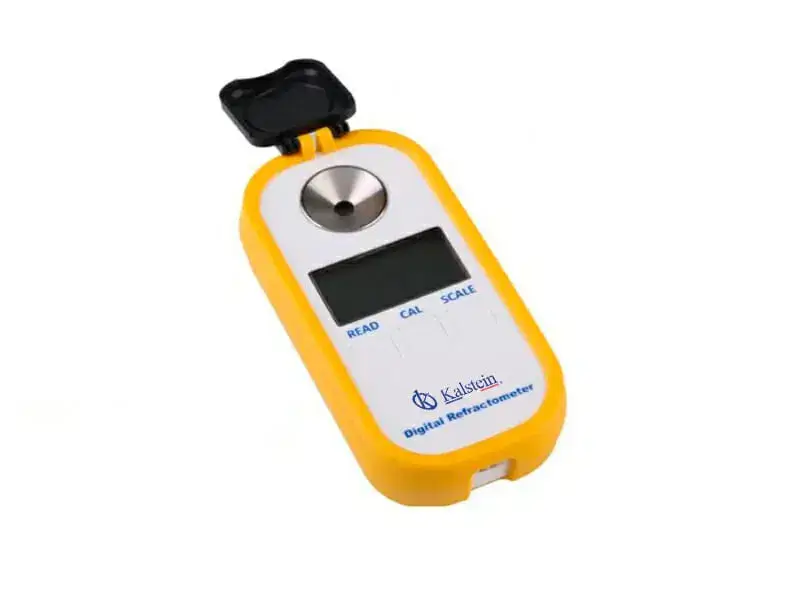
How to Integrate Digital Salinity Refractometers with LIMS for Data Streamlining?
In modern laboratory environments, data management is critical, particularly in fields where precise measurements are essential. Digital salinity refractometers are sophisticated tools that provide accurate salinity measurements in various solutions. However, to maximize their potential, integrating these devices with Laboratory Information Management Systems (LIMS) is vital. This guide explores the best practices for achieving seamless integration, enhancing data workflows, and ensuring compliance with industry standards.
Understanding Digital Salinity Refractometers
Digital salinity refractometers are essential instruments used to measure the salinity of solutions, such as sodium chloride or seawater. They offer precise and straightforward readings, featuring automatic temperature compensation (ATC) to ensure accuracy across a wide temperature range (0 to 40°C). Models such as the YR05953 and YR05954 are known for their user-friendly interfaces, requiring only a drop of sample for immediate readings.
Benefits of LIMS Integration
Integrating digital salinity refractometers with LIMS facilitates real-time data entry, reduces transcription errors, and ensures that critical information is readily accessible for decision-making. This integration promotes a more efficient laboratory workflow, enabling better data tracking and compliance with regulatory standards.
Key Integration Protocols
When integrating digital salinity refractometers with LIMS, it's important to consider the various connectivity protocols available. Common protocols include ASTM, HL7, and RESTful APIs. These enable data exchange between the refractometer and LIMS, facilitating seamless communication and real-time updates.
Choosing the Right Model for LIMS Integration
Different models offer varying functionalities that may impact how well they integrate with LIMS. For instance, the YR05955 is ideal for density measurements, while the YR05956 focuses on refractive index. Understanding the capabilities and data output formats of each model will help in determining the best fit for specific laboratory needs.
Comparison of Available Models
| Model Code | Measurement Range | Minimum Division | Precision | Automatic Temperature Compensation (ATC) | Best For |
|---|---|---|---|---|---|
| YR05953 | 0.0 - 28.0% | 0.10% | ±0.1% | Yes | Sea Water Analysis |
| YR05954 | 0 - 280‰ | 1‰ | ±1‰ | Yes | Laboratory Research |
| YR05955 | 1.000 - 1.217 | 0.001 | ±0.002 | Yes | Density Measurement |
| YR05956 | 1.3330 - 1.3900 nD | 0.0001 nD | ±0.0003 nD | Yes | Refractive Index Measurement |
| YR05957 | 0 - 100‰ | 1‰ | ±2‰ | Yes | General Salinity Testing |
| YR05958 | 0 - 57‰ | 1‰ | ±2‰ | Yes | Clinical Applications |
| YR05959 | 1.000 - 1.070 | 0.001 | ±0.002 | Yes | Density Applications |
| YR05960 | 1.3330 - 1.3530 nD | 0.0001 nD | ±0.0003 nD | Yes | Refractive Index Testing |
Common Mistakes and How to Avoid Them
One common mistake when integrating refractometers with LIMS is failing to validate the data transfer process. Ensuring the accuracy and integrity of data must be a priority. Another mistake is overlooking the specific compatibility requirements of the models, which may lead to unsuccessful data integration. Regular training and system updates can mitigate these issues.
Frequently Asked Questions
How can I ensure compliance with ISO 17025 using a salinity refractometer?
To ensure compliance with ISO 17025, models like the YR05953 should be calibrated regularly and maintained with documentation of procedures and results. This ensures accurate measurements and traceability, as required by the standard.
What are the connectivity options for the YR05954 in a LIMS setup?
The YR05954 offers connectivity through RESTful APIs, allowing for easy integration into most LIMS systems. This facilitates real-time data synchronization essential for laboratory operations.
Which digital salinity refractometer is best for high-throughput laboratories?
The YR05956 is ideal for high-throughput laboratories due to its fast reading capabilities and accurate refractive index measurements, making it suitable for quick data entry into LIMS.
What maintenance practices should I follow for LIMS-integrated refractometers?
Regular cleaning, calibration, and software updates are essential maintenance practices for LIMS-integrated refractometers like the YR05957. These ensure optimal performance and accurate data reporting.
How does integrating refractometers with LIMS improve data accuracy?
Integrating tools like the YR05958 with LIMS minimizes manual data entry errors and provides real-time data validation, improving the overall accuracy of laboratory results.
What role does automatic temperature compensation play in refractometer use?
Automatic temperature compensation (ATC) in models like the YR05955 ensures accurate salinity measurements regardless of temperature variations, essential for reliable data in LIMS.
Which digital salinity refractometer models work best for environmental testing?
The YR05954 and YR05956 are well-suited for environmental testing due to their broad measurement ranges and accuracy, making them effective for field applications and data integration.
What are the key features to look for in a LIMS-compatible refractometer?
Look for features like ATC, connectivity options (e.g., RESTful APIs), and ease of use in models like the YR05953, which enhance efficiency and data management in laboratory settings.
If you are looking for a fusion of innovation and quality, you have come to the right place. At Kalstein, we offer you the luxury of exploring our exclusive catalog of laboratory equipment. We manufacture every device to the highest standards of excellence. Our intuitive and seamless online purchasing channels are designed for your convenience, securing the most competitive prices. Hesitate no longer — we bring science to life, it is time to become part of our community.