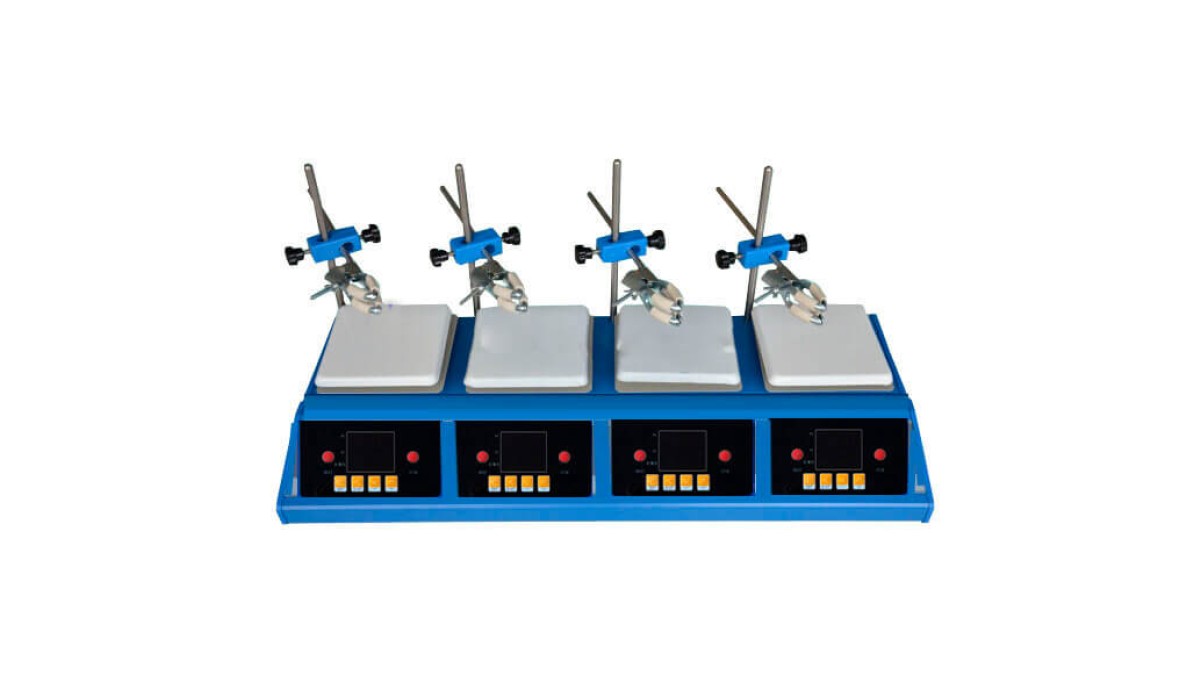
Multiposition Intelligent Digital Display Ceramic Hotplate Stirrer: Practical Applications and Techniques 2026
In the modern laboratory, multiposition intelligent digital display ceramic hotplate stirrers are indispensable tools that enhance the efficiency and accuracy of various scientific experiments. This article aims to equip laboratory professionals with a comprehensive understanding of how to effectively use these devices in 2026. We will delve into the applications, techniques, and best practices associated with this family of equipment.
What is it used for in 2026
Multiposition intelligent digital display ceramic hotplate stirrers are primarily utilized for heating and stirring liquids in laboratories. They offer precise temperature control and adjustable stirring speeds, making them ideal for chemical reactions, sample preparation, and biological experiments. Their multiposition capability allows several samples to be processed simultaneously, significantly increasing productivity in laboratory workflows.
History and evolution of the technology
The development of ceramic hotplate stirrers dates back several decades. Initially, these devices were purely mechanical, utilizing simple heating elements and manual controls. Over the years, advancements in electronics and materials science have led to the integration of digital displays, PID temperature control, and multiposition functionalities. Today, these stirrers are equipped with corrosion-resistant surfaces, enhancing their durability and usability in various laboratory settings.
How to use it step by step
Using a multiposition intelligent digital display ceramic hotplate stirrer involves several straightforward steps:
- Setup: Place the stirrer on a stable, flat surface away from direct sunlight.
- Connect: Plug in the device and ensure all power and control settings are correctly connected.
- Prepare Samples: Place beakers or containers filled with the desired liquids on the designated positions.
- Temperature Setting: Use the digital display to set the desired temperature for each position.
- Stirring Speed: Adjust the stirring speed as required for each sample.
- Start Operation: Activate the stirrer, monitoring the progress through the display.
- Observation: Make adjustments as necessary based on the reactions observed.
- Shutdown: After completion, turn off the device and allow it to cool before cleaning.
Best techniques and protocols
To maximize the effectiveness of multiposition intelligent digital display ceramic hotplate stirrers, consider the following techniques:
- Calibration: Regular calibration ensures accuracy in temperature and speed settings.
- Even Distribution: Ensure that samples are evenly distributed on the hotplate for uniform heating.
- Use Appropriate Containers: Choose containers that can withstand high temperatures and are compatible with the stirrer.
- Monitoring: Regularly check the progress and make adjustments to the temperature or stirring speed as needed.
- Routine Maintenance: Schedule routine maintenance to ensure longevity and performance.
Practical applications by laboratory type
Multiposition intelligent digital display ceramic hotplate stirrers find applications across various laboratory types:
- Chemical Laboratories: For synthesizing chemical compounds and conducting reaction kinetics studies.
- Biological Laboratories: For mixing biological samples and reagents in a controlled environment.
- Environmental Testing: For preparing samples that require heating and stirring for accurate analysis.
- Educational Institutions: For teaching fundamental concepts of chemistry and biology through practical experiments.
Regulations, standards and certifications
When utilizing multiposition intelligent digital display ceramic hotplate stirrers, it is essential to adhere to relevant standards and regulations. Equipment must comply with laboratory safety standards such as ANSI/ISEA 105 for PPE and relevant guidelines from the Occupational Safety and Health Administration (OSHA). Certifications from recognized bodies ensure that the equipment is reliable and meets operational standards, which is critical for laboratory accreditation.
Comparison with alternative technologies
Multiposition intelligent digital display ceramic hotplate stirrers offer several advantages over alternative technologies:
- Stirring Efficiency: Unlike mechanical stirrers, ceramic hotplate stirrers are quieter and more efficient.
- Temperature Control: Digital displays offer precise temperature management compared to analog models.
- Multiposition Capability: These stirrers can handle multiple samples simultaneously, unlike single-position options.
Comparison of available models
| Model | Best for | Key specs | Recommended use case |
|---|---|---|---|
| YR02953 | Small batch chemical reactions | 4 positions, 100-1800 RPM, Max temp 400°C | Ideal for routine chemistry experiments |
| YR02954 | General laboratory use | 4 positions, 100-1800 RPM, Max temp 400°C | Versatile for various laboratory applications |
| YR02955 | High-volume sample processing | 6 positions, 100-1800 RPM, Max temp 400°C | Suitable for large scale experiments |
| YR02947 | Small scale reactions | 2 positions, 0-2000 RPM, Max temp 400°C | Best for quick stirring of small samples |
| YR02948 | Biological studies | 2 positions, 0-2000 RPM, Max temp 400°C | Effective for mixing biological reagents |
| YR02949 | Standard laboratory tasks | 2 positions, variable RPM, Max temp 400°C | Complements various lab activities |
Common mistakes and how to avoid them
Laboratory professionals often make mistakes when using multiposition intelligent digital display ceramic hotplate stirrers. Here are common pitfalls and how to avoid them:
- Overloading: Avoid placing too many samples on the hotplate to prevent uneven heating.
- Incorrect Temperature Settings: Always verify temperature settings before starting experiments to avoid damage to samples.
- Ignoring Calibration: Regular calibration is crucial for accurate performance; don’t skip this step.
- Poor Maintenance: Neglecting routine cleaning and servicing can lead to malfunction; develop a maintenance schedule.
Maintenance, calibration and good practices 2026
Maintaining multiposition intelligent digital display ceramic hotplate stirrers requires diligence:
- Routine Cleaning: Clean surfaces regularly to prevent contamination and ensure accurate results.
- Calibration: Perform calibration every few months or as required by usage intensity.
- Inspection: Regularly check for wear and tear, especially on heating elements and controls.
Cost-benefit analysis 2026
A cost-benefit analysis of multiposition intelligent digital display ceramic hotplate stirrers highlights their value:
- Initial Investment: While the upfront cost may be higher than simpler models, the efficiency gained justifies the investment.
- Time Savings: Multiposition capabilities significantly reduce the time required for sample preparation.
- Enhanced Accuracy: Improved temperature and stirring controls lead to higher quality results, reducing the risk of costly errors.
Frequently asked questions
What should I consider when selecting a hotplate stirrer?
When selecting a hotplate stirrer, consider the number of positions you need, the required temperature range, and the stirring speed capabilities. Also, evaluate the materials used in construction for durability and ease of cleaning.
How do I ensure my stirrer is calibrated correctly?
To ensure proper calibration, follow the manufacturer's guidelines and use calibration devices or standards. Regularly schedule calibration checks based on your usage frequency to maintain accuracy.
Can I use different types of vessels on the stirrer?
Yes, but ensure that the vessels are compatible with high temperatures and are of an appropriate size for the stirrer's positions. Avoid using glass containers that are not designed for heating.
What maintenance is required for hotplate stirrers?
Routine maintenance includes cleaning the surfaces after each use, checking for wear or damage, and performing calibration at regular intervals. Ensure that the heating elements are functioning properly and that electrical connections are secure.
How can I improve the efficiency of my laboratory workflow with these stirrers?
To enhance efficiency, utilize the multiposition capabilities to run multiple experiments simultaneously. Proper preparation of samples and regular monitoring of conditions during experiments will also improve overall lab productivity.
What safety precautions should I take when using hotplate stirrers?
Always wear appropriate laboratory safety gear, such as gloves and goggles. Ensure that the workspace is organized and free from hazards, and monitor the stirrers for any irregularities during operation.
If you are looking for a fusion of innovation and quality, you have come to the right place. At Kalstein, we offer you the luxury of exploring our exclusive catalog of laboratory equipment. We manufacture every device to the highest standards of excellence. Our intuitive and seamless online purchasing channels are designed for your convenience, securing the most competitive prices. Hesitate no longer — we bring science to life, it is time to become part of our community.