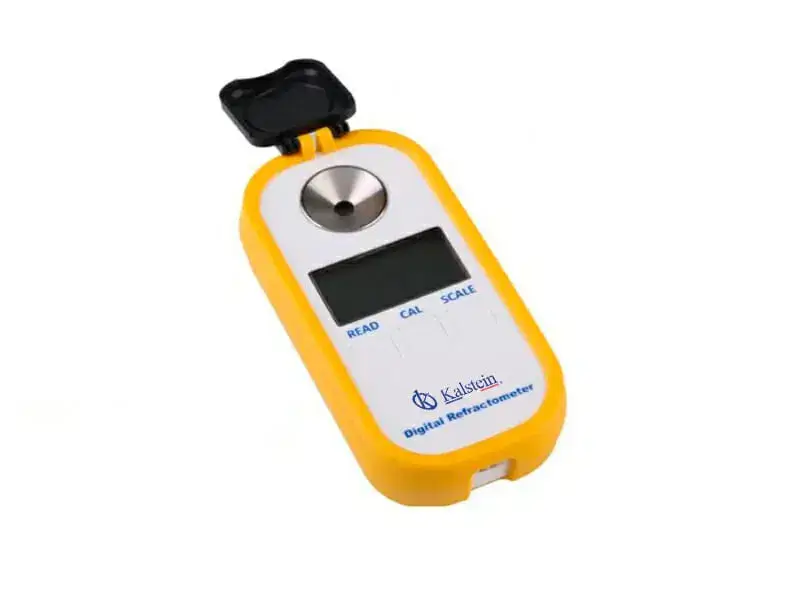
ISO/IEC Standards and Regulatory Compliance in Laboratory Equipment: A Deep Dive into Digital BRIX+ Salinity Refractometers
Laboratories today operate under increasingly stringent ISO/IEC standards aimed at ensuring accuracy, reliability, and compliance. Digital BRIX+ Salinity Refractometers are essential tools for measuring the concentration of soluble solids and salinity in various aqueous solutions, making them a critical component in laboratories. This article explores how these refractometers align with ISO/IEC compliance, the benefits of different models available, and how to navigate the regulatory landscape effectively.
Understanding ISO/IEC Standards Relevant to Refractometers
ISO/IEC standards set forth guidelines for quality assurance and operational efficiency in laboratory settings. Key standards include:
- ISO 17025: This standard specifies the general requirements for the competence of testing and calibration laboratories, emphasizing the importance of accuracy in measurements.
- ISO 15189: Specifically for medical laboratories, it focuses on quality management and competence for medical laboratories, including the requirement for valid test results.
- IEC 61010: Covers safety requirements for electrical equipment used in measurement, control, and laboratory use, ensuring operator safety and equipment reliability.
How Digital BRIX+ Salinity Refractometers Meet Compliance
Each model within the Digital BRIX+ Salinity Refractometer family is engineered to support compliance with these standards:
| Model | ISO/IEC Clauses Covered | Traceability Features | Best For |
|---|---|---|---|
| YR05961 | ISO 17025 | Automatic Temperature Compensation | Fruit juice analysis |
| YR05962 | ISO 17025 | Calibration history | Water quality testing |
| YR05963 | ISO 15189 | Data logging capabilities | Marine applications |
| YR05964 | IEC 61010 | Compliance certifications | Laboratory research |
| YR05965 | ISO 17025 | Measuring standards traceability | Industrial use |
Comparison of Available Models
| Model | Measurement Range | Min. Division | Precision | Price (USD) |
|---|---|---|---|---|
| YR05961 | 0-50% Brix | 0.10% | ±0.2% | 76.00 |
| YR05962 | 0-280‰ Salinity | 0.10% | ±0.2% | 76.00 |
| YR05963 | 0-280‰ Salinity | 1‰ | ±2‰ | 76.00 |
| YR05964 | 1.000-1.217 Density | 0.001 | ±0.002 | 76.00 |
| YR05965 | 1.3330-1.4200 nD | 0.0001 nD | ±0.0003 nD | 76.00 |
Common Mistakes and How to Avoid Them
Laboratories often encounter challenges in achieving compliance with ISO/IEC standards. Some common mistakes include:
- Neglecting proper calibration protocols: Ensure all models, such as YR05961, are calibrated according to prescribed standards.
- Inadequate documentation: Maintain detailed records of calibration, maintenance, and operational procedures to support compliance.
- Ignoring environmental conditions: Models like YR05964 require specific temperature and humidity settings for optimal performance.
Specific Standards Impacting Digital BRIX+ Salinity Refractometers
Each standard imposes specific requirements that affect how Digital BRIX+ Salinity Refractometers operate in a laboratory setting:
- ISO 17025: Requires accuracy and reliability in test results, ensuring that refractometers such as YR05962 are regularly tested against national standards.
- ISO 15189: Mandates competent testing processes for medical laboratories, ensuring models like YR05963 provide valid testing results for clinical analyses.
- IEC 61010: Focuses on safety protocols, ensuring that all equipment, including YR05964, maintains operator safety during use.
Implementing an Effective Compliance Strategy
To successfully implement ISO/IEC compliance, laboratories should:
- Develop a comprehensive quality management system that integrates the usage of Digital BRIX+ Salinity Refractometers.
- Regularly perform audits to ensure all processes, including the use of YR05965, meet the required standards.
- Invest in training staff to understand and implement the necessary compliance measures related to equipment operation and maintenance.
Frequently Asked Questions
How do Digital BRIX+ Salinity Refractometers ensure compliance with ISO 17025 in 2026?
Digital BRIX+ Salinity Refractometers like YR05961 ensure compliance with ISO 17025 by incorporating automatic temperature compensation and precision measurements, which are essential for accurate testing in lab environments.
What is the importance of calibration for Digital BRIX Refractometers according to ISO standards?
Calibration is crucial for Digital BRIX Refractometers, as it ensures that models like YR05962 maintain the precision and reliability required by ISO standards, thereby supporting accurate results in a laboratory setting.
Which regulatory compliance features should I consider for a Digital BRIX Refractometer?
When choosing a Digital BRIX Refractometer, consider features like traceability, automatic temperature compensation, and calibration history, which are vital for compliance with ISO 17025 and IEC 61010 standards.
How often should Digital BRIX Refractometers be calibrated for ISO compliance?
Digital BRIX Refractometers should typically be calibrated before use and at regular intervals, such as every month, to comply with ISO standards, ensuring models like YR05963 provide reliable measurements.
What are the key advantages of using YR05964 for laboratory compliance?
Model YR05964 offers significant advantages for laboratory compliance, including precise density measurements and built-in safety features that align with IEC 61010 standards, ensuring operator safety during use.
Which industries benefit most from Digital BRIX+ Salinity Refractometers in terms of compliance?
Industries such as food and beverage, environmental testing, and clinical laboratories benefit from Digital BRIX+ Salinity Refractometers like YR05965, ensuring compliance with ISO standards and improving measurement accuracy.
How can Digital BRIX Refractometers improve operational efficiency in laboratories?
Digital BRIX Refractometers enhance operational efficiency by providing quick and accurate measurements, which are critical in laboratories requiring compliance with ISO standards, thus reducing overall testing time.
What documentation is needed for compliance with ISO standards using Digital BRIX Refractometers?
Essential documentation includes calibration records, maintenance logs, and test result reports for models such as YR05961, which collectively ensure compliance with ISO standards in laboratory operations.
If you are looking for a fusion of innovation and quality, you have come to the right place. At Kalstein, we offer you the luxury of exploring our exclusive catalog of laboratory equipment. We manufacture every device to the highest standards of excellence. Our intuitive and seamless online purchasing channels are designed for your convenience, securing the most competitive prices. Hesitate no longer — we bring science to life, it is time to become part of our community.