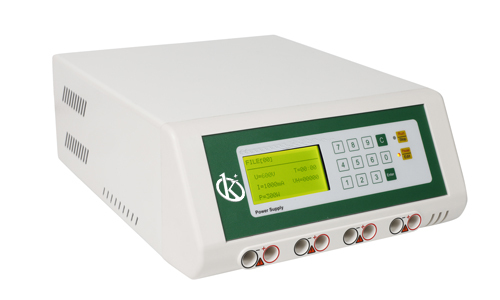
High Voltage Power Supply: Applications in Research, Biotechnology and Academia 2026
What is it used for in 2026
The High Voltage Power Supply is an essential tool in various fields such as research, biotechnology, and academia. In 2026, its primary applications include:
- Electrophoresis: Facilitating the separation of molecules in DNA, RNA, and proteins.
- Material Testing: Assessing the electrical properties of materials in development.
- Experimental Research: Enabling experiments that require specific voltage and current levels.
- Medical Applications: Supporting procedures that involve high voltage, including some diagnostic equipment.
History and evolution of the technology
The evolution of High Voltage Power Supply technology dates back to the early 20th century. Initially used in basic laboratory settings, advancements have led to the incorporation of microprocessor technology for enhanced control and precision. The importance of reliability and safety has become paramount, leading to modern models equipped with features such as touch controls, automatic memory functions, and real-time monitoring.
How to use it step by step
Using a High Voltage Power Supply can be simplified into the following steps:
- Setup: Ensure the power supply is placed in a stable area with adequate ventilation.
- Connections: Connect the output terminals to the desired equipment or experiment setup.
- Configuration: Use the touch interface to set the desired voltage, current, and timing parameters.
- Monitoring: Keep an eye on the LCD display for real-time data on output values.
- Execution: Start the operation and monitor the performance throughout the experiment.
Best techniques and protocols
To maximize the effectiveness of High Voltage Power Supplies, consider the following techniques and protocols:
- Calibrate the equipment regularly to ensure accurate readings.
- Use appropriate safety gear to protect against accidental discharges.
- Implement strict protocols for power management during experiments.
- Document all settings and results for future reference and compliance.
Practical applications by laboratory type
The High Voltage Power Supply can be utilized across various laboratory settings:
- Research Laboratories: For experimental setups requiring precise voltage control.
- Biotechnology Labs: In genetic research and protein analysis.
- Educational Institutions: For teaching the principles of electromagnetism and electrical engineering.
Regulations, standards and certifications
Compliance with regulations and standards is crucial when working with High Voltage Power Supplies. Key considerations include:
- Adherence to safety standards set by organizations such as OSHA and ANSI.
- Regular inspections and certifications to ensure equipment meets industry standards.
- Following manufacturer guidelines for optimal operation and maintenance.
Comparison with alternative technologies
When comparing High Voltage Power Supplies with alternative technologies:
- Transformer-Based Supplies: Typically less efficient and more cumbersome to use.
- Battery-Powered Supplies: Limited in voltage and current capabilities compared to high-voltage supplies.
- Solid-State Power Supplies: Offer advantages in compactness but may lack the range of voltage outputs.
Comparison of available models
| Model | Best for | Key specs | Recommended use case |
|---|---|---|---|
| YR03409 | Electrophoresis with advanced features | 20–3000 V, 1–200 mA, 1–200 W | High precision experiments needing set voltage and current control |
| YR03408 | Complex electrophoresis procedures | 20–5000 V, 1–200 mA, 1–100 W | Applications requiring multiple methods storage |
| YR03405 | General laboratory use | 10–600 V, 1–500 mA, 1–300 W | Standard experiments with moderate power requirements |
| YR03406 | Research requiring mid-range voltage | 20–1600 V, 1–100 mA, 1–160 W | Experimental setups needing careful voltage adjustments |
| YR03407 | High voltage applications | 20–3000 V, 1–400 mA, 1–400 W | Advanced research requiring high voltage and current |
Common mistakes and how to avoid them
To ensure successful use of High Voltage Power Supplies, avoid these common mistakes:
- Neglecting safety protocols: Always prioritize safety when working with high voltage.
- Improper connections: Double-check connections before powering on the equipment.
- Not calibrating regularly: Regular calibration is essential for accurate results.
Maintenance, calibration and good practices 2026
Regular maintenance and calibration ensure the longevity and reliability of High Voltage Power Supplies:
- Schedule routine check-ups and recalibrate as specified by the manufacturer.
- Keep the equipment clean and dry to prevent electrical faults.
- Train personnel on proper usage and emergency procedures.
Cost-benefit analysis 2026
When considering a High Voltage Power Supply, weigh the costs against the benefits:
- Initial investment may be high, but the efficiency and reliability can lead to significant long-term savings.
- High-quality equipment reduces the likelihood of breakdowns and the costs associated with downtime.
- Evaluate the return on investment based on research output and productivity improvements.
Frequently asked questions
What safety measures should I take when using a High Voltage Power Supply?
Always wear appropriate personal protective equipment, ensure that the workspace is dry, and be familiar with emergency protocols.
How do I determine which model to choose for my laboratory?
Consider the specific voltage and current requirements of your experiments, as well as the functions and features offered by each model.
Can I use a High Voltage Power Supply for educational purposes?
Yes, many educational institutions use them to teach principles of electricity and to conduct experiments in physics and engineering labs.
What are the common voltage and current ranges available?
Common ranges include 20-5000 V and 1-500 mA, depending on the model and its specifications.
How often should I calibrate my High Voltage Power Supply?
Calibration should be performed regularly as recommended by the manufacturer, typically every 6 months to a year, depending on usage.
What training do users need to operate this equipment safely?
Users should be trained in safety protocols, proper setup, and operational procedures to avoid accidents and ensure accurate results.
Can I integrate a High Voltage Power Supply with other laboratory equipment?
Yes, many models are designed to be compatible with various laboratory setups and can be integrated into complex experimental configurations.
If you are looking for a fusion of innovation and quality, you have come to the right place. At Kalstein, we offer you the luxury of exploring our exclusive catalog of laboratory equipment. We manufacture every device to the highest standards of excellence. Our intuitive and seamless online purchasing channels are designed for your convenience, securing the most competitive prices. Hesitate no longer — we bring science to life, it is time to become part of our community.