

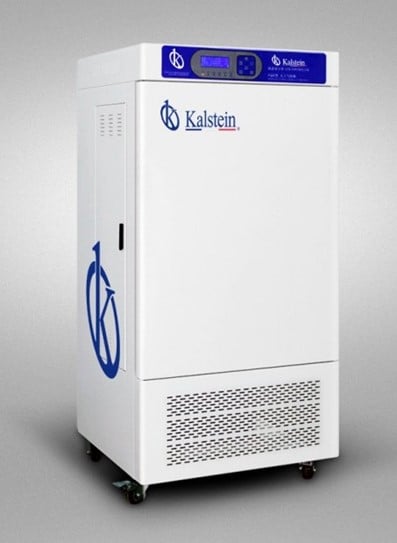
Description
Plant growth chambers are essential equipment for botanical research, commercial horticulture, academic and pharmaceutical laboratories, as well as for universities and government institutions dedicated to biotechnological studies. Their advanced structure allows the simulation of precise environmental conditions by controlling factors such as temperature, humidity, and lighting, which helps optimize seed germination, tissue culture, algae reproduction, and the breeding of small insects. Thanks to their wide programming range, these chambers allow cultivation cycles lasting from 3 to 6 months, ensuring complete monitoring of experiments.
The system uses eco-friendly fluorine-free refrigerant R134, ensuring efficient and sustainable operation with a low temperature fluctuation level. The internal stainless-steel structure, combined with adjustable shelves, facilitates the organization of samples of various volumes. The unit features an LCD panel with a programmable PID controller, allowing parameters to be managed with high precision and offering alarm functions, a timer, and automatic recovery after power failure. Thanks to their capabilities, these chambers provide an excellent price-performance alternative compared to more expensive imported models; on the international market, they typically range between USD 4,500 and USD 18,000 depending on volume and functionality.
Frequently Asked Questions about the Plant Growth Chamber:
What type of cultivation can be performed?
From seed germination to tissue culture, algae, and entomological samples.
Is it easy to program?
Yes, the digital panel allows precise configuration of lighting, temperature, and humidity cycles.
Does it consume a lot of energy?
Thanks to the eco-friendly refrigerant and efficient compressor, energy consumption is reduced compared to other equipment.
Advantages and Disadvantages
Advantages:
-
Extremely precise environmental control.
-
Stable and efficient operation.
-
Suitable for long-term research.
Disadvantages:
-
Requires installation in a conditioned space.
-
Moderate maintenance to ensure optimal precision.
Field Applications
Used in academic laboratories, agro-industries, climate research centers, and universities. For example, they are ideal for simulating seasonal conditions or assessing physiological crop responses in pharmaceutical research.
Recommendations
To maximize durability, it is recommended to clean the shelves periodically, check sensor calibration, and perform regular inspections of the water system. Because environmental parameters directly influence results, technical oversight is key.
If your institution needs to increase productivity and precision in scientific research, we invite you to request a quotation or even generate an automatic quotation directly from our Kalstein Plus platform, where you can obtain updated prices and customized options.
Technical Specifications
| Model | YR0150PGZ | YR0250PGZ | YR0350PGZ | YR0800PGZ | YR01000PGZ |
|---|---|---|---|---|---|
| Interior (mm) | 800×500×380 (150L) | 1000×550×450 (250L) | 1000×580×600 (350L) | 1200×1050×650 (800L) | 1200×1200×700 (1000L) |
| Volume (L) | 150 | 250 | 350 | 800 | 1000 |
| Voltage (V) | 220 | 220 | 220 | 220 | 220 |
| Power (kW) | 0.9 | 1.0 | 1.2 | 2.8 | 3.6 |
| Timer | 0~9999 min | ||||
| Temp. Range (℃) | 0~65 | ||||
| Shelves | 2 | 4 | |||
| Lux | 10,000 LX | 15,000 LX | 15,000 LX | 15,000 LX | 15,000 LX |
| Temperature Accuracy (℃) | ±0.1 | ||||
| Fluctuation (%) | ±0.5 |

